
From Billable Hours to Carbon Hours: How Consultancies Track Emissions

Will Marshall
Thursday, October 9, 2025 • 4 min read
Consultancies pride themselves on efficiency, data, and precision. But when it comes to measuring their own environmental impact, many still rely on rough estimates, or nothing at all.
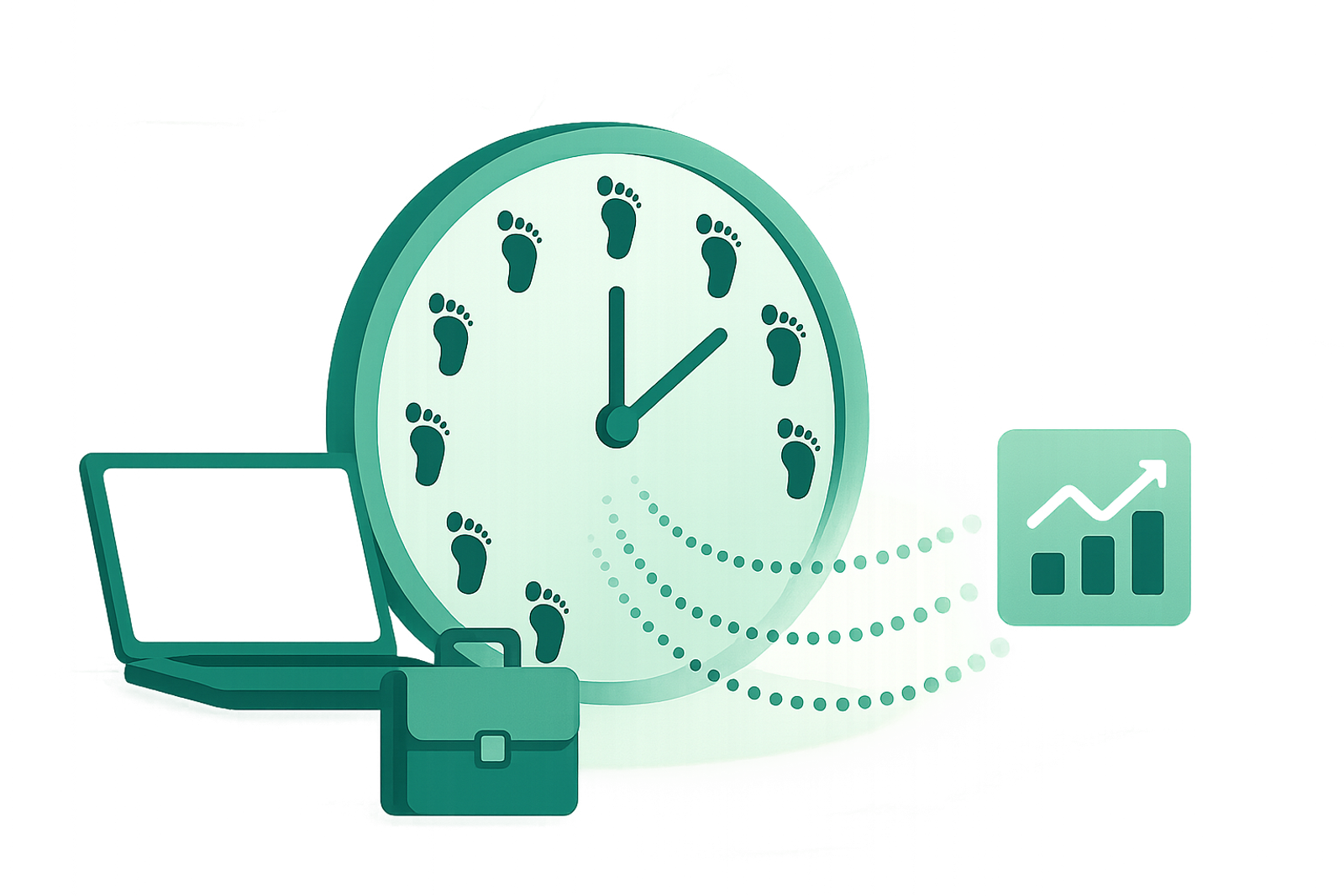
The truth is that while consultancies don’t make physical goods, they still generate emissions through travel, technology, and operations. In a world where clients expect sustainability credentials alongside strategy, consultancies are learning to turn their billable hours into carbon hours, a measurable, reportable footprint of how projects are delivered.
Why Carbon Accounting Matters for Consultancies
Client expectations – Large corporates and public-sector clients now require carbon data from suppliers, especially under CSRD and PPN 06/21. A credible footprint can make the difference in a tender.
Brand reputation – Clients increasingly choose partners who practise what they preach. Transparent sustainability reporting builds trust and differentiation.
Employee engagement – Consultants, especially younger hires, want to work for firms that reflect their values. Measurable climate action is a strong retention lever.
Operational insight – Understanding your emissions reveals inefficiencies—reducing travel, optimising technology use, or improving office energy management.
What Drives a Consultancy’s Carbon Footprint
Consultancies operate across multiple clients, sites, and travel networks. Their emissions typically cluster around:
- Business travel – Client site visits, conferences, flights, and reimbursed mileage.
- IT and cloud infrastructure – Laptops, SaaS tools, virtual collaboration platforms, and data storage.
- Office operations – Heating, cooling, lighting, catering, and purchased goods.
- Subcontractors and suppliers – Freelancers, outsourced services, and partner firms all contribute Scope 3 emissions.
While emissions per project may appear small, the cumulative footprint across hundreds of engagements can be significant.
From Billable Hours to Carbon Hours
Traditional consulting metrics focus on utilisation, revenue, and profit per hour. But carbon intensity per hour of work is fast becoming a new KPI.
Tracking carbon per billable hour enables firms to:
- Compare the emissions profile of projects or clients.
- Identify high-impact activities such as travel-heavy engagements.
- Set targets to reduce the footprint of project delivery.
With transaction-based carbon accounting, this shift is finally practical. By mapping financial transactions—travel bookings, SaaS subscriptions, utilities, supplier invoices—to emissions factors, consultancies can calculate the carbon cost of each engagement without intrusive data collection.
We explore this approach in more depth in Transaction-Based Carbon Footprinting and Connecting Financial Data to Carbon Emissions.
A Practical Method for Consultancy Carbon Accounting
Start with spend data Pull expense and supplier data from your finance system. This gives instant coverage across all scopes - including the usually invisible Scope 3 categories.
Categorise transactions Group spend into emissions categories (e.g. “Travel – Air,” “Software Subscriptions,” “Office Utilities”). Emitrics automates this with AI-powered categorisation to save manual work.
Apply emission factors Use input-output methodology carbon accounting to estimate emissions per spend category.
Refine accuracy over time Replace default factors with supplier- or product-specific data as it becomes available: what we call progressive carbon footprint refinement.
Report and act Use dashboards to visualise carbon intensity per project or department. This data can inform travel policies, client reporting, and science-based target setting.
Practical Steps to Reduce Consultancy Emissions
- Cut travel – Prioritise hybrid delivery and virtual workshops where feasible.
- Optimise technology – Choose cloud providers with renewable energy commitments.
- Green your offices – Move to energy-efficient workspaces or shared hubs.
- Engage suppliers – Request carbon data from key partners and integrate it into your reporting.
- Educate teams – Encourage consultants to consider the carbon cost of their project delivery methods.
Why Emitrics Fits the Consulting Model
Consultancies are data-driven by nature, but carbon accounting has traditionally been manual and fragmented. Emitrics automates it by turning your existing financial data into emissions insights:
- Full coverage across Scopes 1, 2, and 3
- AI-powered categorisation of expenses
- Hierarchical emissions factors for progressive accuracy
- Audit-ready outputs aligned to GHG Protocol and CSRD
In short, we help you move from spreadsheets to strategy, so you can quantify the carbon footprint of every project, client, and hour worked.